Vera Russell · 5 October 2026
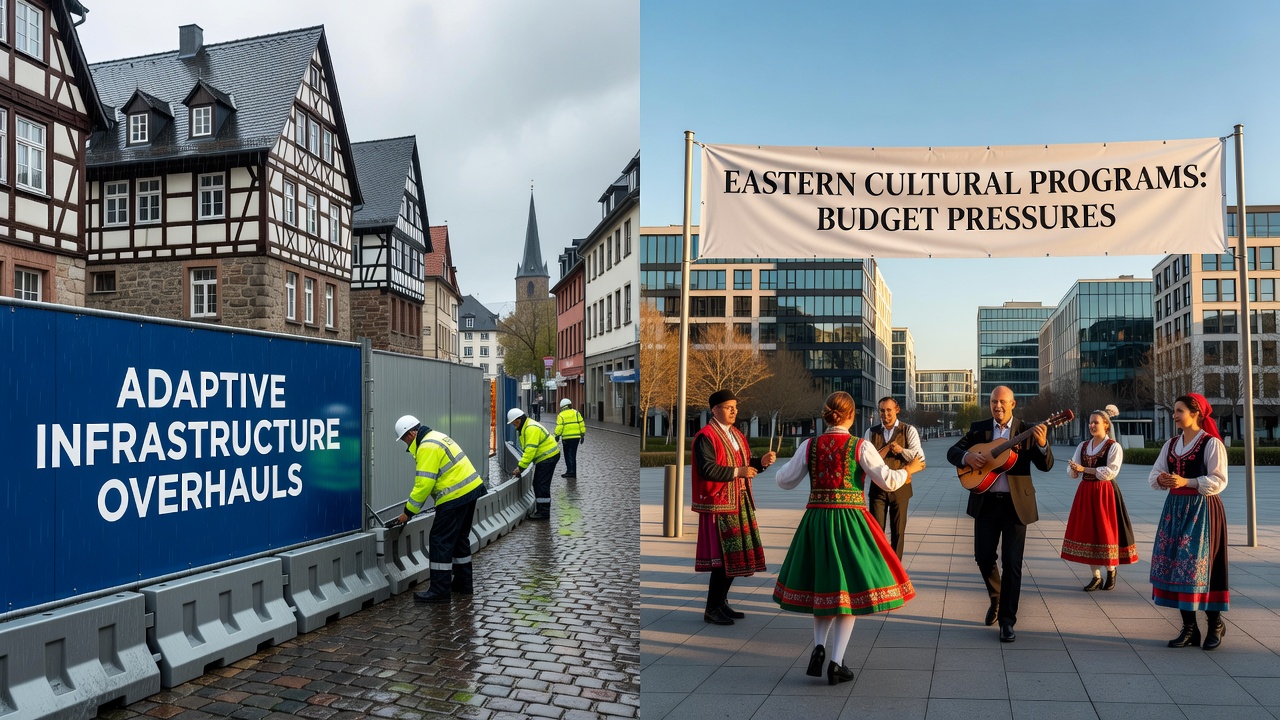
Record Summer Rains Push Rhineland Communities Toward Adaptive Infrastructure Overhauls While Eastern Cultural Programs Face Budget Pressures
Record rainfall totals across the Rhineland this summer have driven local governments to accelerate plans for upgraded drainage networks, elevated roadways, and reinforced river barriers, while eastern states simultaneously report reduced allocations for theater troupes, museum exhibitions, and regional festivals amid competing national priorities.
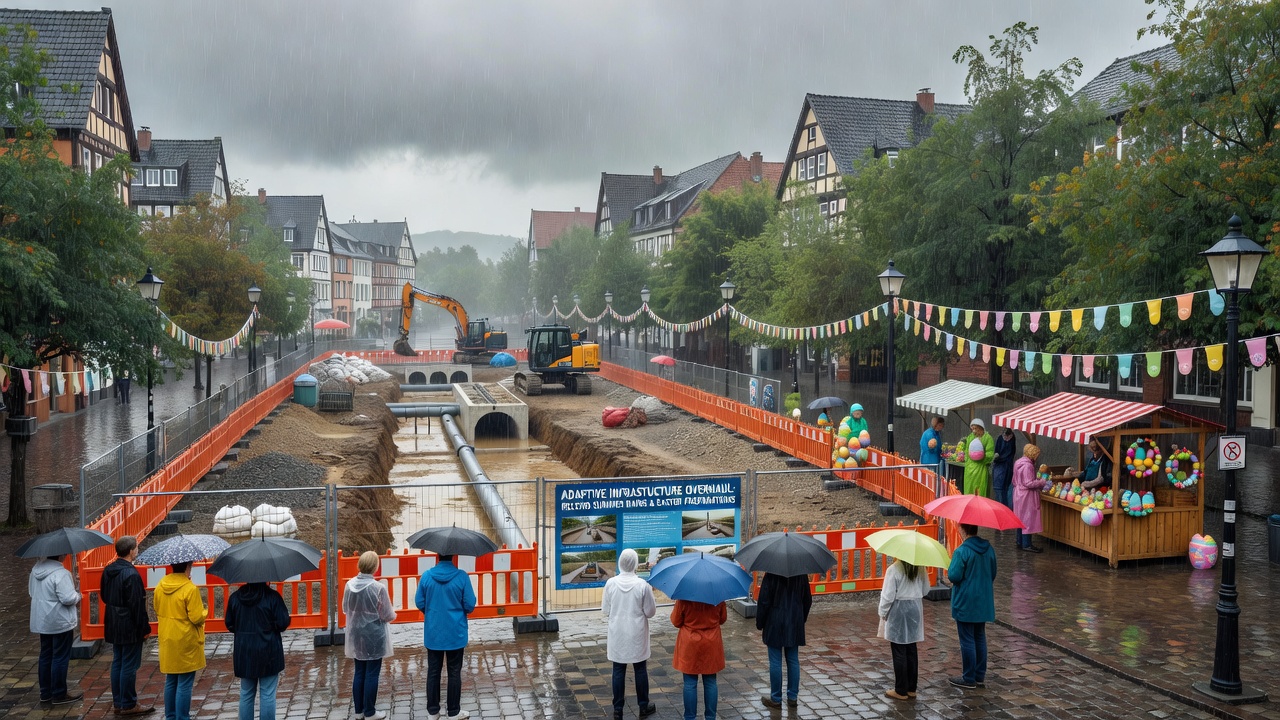
Rhineland Rainfall Data and Immediate Effects
Meteorological records compiled by the German Weather Service show precipitation levels in parts of North Rhine-Westphalia and Rhineland-Palatinate exceeded long-term averages by more than 40 percent between June and August, resulting in repeated flash floods that inundated residential basements, disrupted rail lines, and forced temporary evacuations in several districts.
Authorities documented over 180 separate flood incidents in the region during those months, with the heaviest downpours concentrated around Cologne, Bonn, and Koblenz, where river gauges reached their highest readings since systematic monitoring began in the 1950s.
Infrastructure Adaptation Projects Advance
Local planning offices have responded by fast-tracking proposals to widen retention basins, install smart pump stations linked to real-time water-level sensors, and raise sections of federal highways that cross known floodplains. Several municipalities have already secured preliminary funding through the federal climate adaptation program, allowing construction crews to begin work on modular flood walls along the Ahr and Erft tributaries before winter sets in.
Engineers at the North Rhine-Westphalia State Agency for Nature, Environment and Consumer Protection note that these measures build on earlier pilot projects tested after the 2021 disaster, yet the current scale requires coordination across multiple counties and integration with updated hydrological models released in early 2026.
Eastern States Navigate Cultural Funding Constraints
At the same time, cultural departments in Saxony, Thuringia, and Brandenburg have confirmed across-the-board cuts averaging 12 percent for the upcoming fiscal year, according to figures released by the German Cultural Council. These reductions affect state-funded orchestras, independent galleries, and youth arts initiatives that previously relied on multi-year grants now subject to annual review.
Officials attribute the tighter budgets to increased national expenditures on disaster response and infrastructure resilience, leaving less room for discretionary cultural spending during the period leading into the 2026 federal elections. Program directors report that several long-running festivals scheduled for October 2026 have been scaled back or merged with neighboring events to stay within revised limits.
National Budget Trade-offs and Regional Coordination
Federal budget documents indicate that allocations for climate-resilient infrastructure rose by 18 percent compared with the previous cycle, while cultural line items remained flat after inflation adjustments. Analysts at the European Environment Agency have tracked similar patterns across other member states facing extreme weather, where emergency infrastructure spending frequently displaces softer policy areas.
Regional governments in both western and eastern states continue to negotiate supplementary grants through the European Regional Development Fund, with applications emphasizing combined benefits such as flood protection that also safeguards historic sites and performance venues located near waterways.
Conclusion
Communities across Germany continue to balance urgent physical adaptations against sustained support for cultural life, with Rhineland infrastructure projects moving forward alongside measured reductions in eastern programming. Ongoing monitoring through late 2026 will determine whether additional federal adjustments can address both sets of pressures without further trade-offs.