Nils Butler · 31 August 2026
The European Union's recent trade tariffs on imported goods from non-EU countries are significantly influencing German manufacturing supply chains. These tariffs, targeting sectors such as metals, electronics, and chemicals, have increased the cost of raw materials and components essential for production. As a result, companies are forced to seek new suppliers or absorb higher expenses, potentially affecting their global market position. Analysts note that this shift could lead to a reconfiguration of traditional trade routes that have been in place for decades.
Effects on Major Sectors
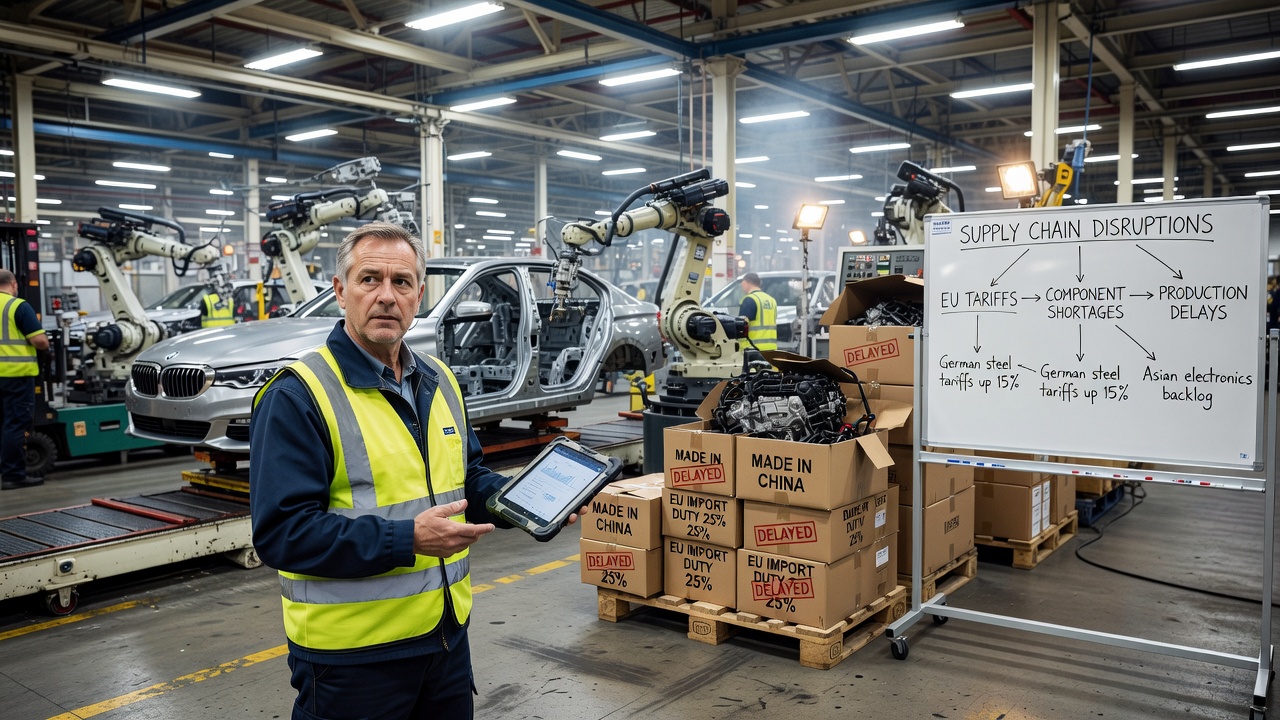
The automotive industry, a cornerstone of German manufacturing, is particularly vulnerable to these changes. Tariffs on steel and electronic parts from Asia have raised procurement expenses by up to 15 percent according to recent industry reports. Major firms like Volkswagen and BMW are actively exploring alternative suppliers in Eastern Europe and North America to maintain production efficiency. The machinery sector also faces issues with delays in production schedules due to disrupted imports of specialized alloys and precision components. This has led to a slowdown in output for several leading exporters.
Smaller enterprises are hit hardest as they lack the resources for rapid adjustments and scale. Industry associations warn of potential job losses if tariffs persist without adequate mitigation strategies. Data from the Federal Statistical Office indicates a 7 percent drop in import volumes from tariffed regions in the last quarter, highlighting the immediate impact on supply dynamics.
Corporate Responses and Future Outlook
In response to these pressures, many German manufacturers are accelerating their diversification efforts across the board. Nearshoring initiatives are gaining significant traction with new investments in facilities located in Poland and Hungary to reduce dependency on distant sources. Others are increasing their inventory buffers to hedge against further potential disruptions in the coming months. Collaborative ventures with other EU partners are also increasing to effectively bypass external tariffs and maintain smooth operations.
Experts suggest that although short-term challenges are evident, these tariffs may ultimately foster more resilient and secure supply chains over the long term. The German government is providing targeted subsidies for comprehensive supply chain audits and advanced technology upgrades to support this necessary transition. Continued monitoring of evolving trade policies will be essential for ensuring sustained growth in the manufacturing sector amid global uncertainties.