Felix Lang · 31 August 2026
Recent EU trade tariffs on key imports from Asia and the United States are prompting significant adjustments across German manufacturing supply chains. Companies in the automotive, machinery and electronics sectors report rising input costs and extended lead times, forcing procurement teams to explore alternative sourcing regions and nearshoring options. Industry analysts note that these measures, aimed at protecting European markets, have accelerated a broader reconfiguration of global value chains that began during the pandemic.
Effects on Key Sectors
The automotive industry, which relies heavily on specialized components from China and the US, has seen tariff-related cost increases of 8 to 12 percent on average. Major firms such as Volkswagen and BMW have initiated reviews of supplier contracts, prioritizing suppliers within the EU or in countries with existing free-trade agreements. Electronics manufacturers face similar pressures, with semiconductor and rare-earth imports now subject to additional duties that disrupt just-in-time production models. Smaller Mittelstand companies, often lacking the scale to absorb these costs, are particularly vulnerable and have begun forming purchasing consortia to negotiate better terms.
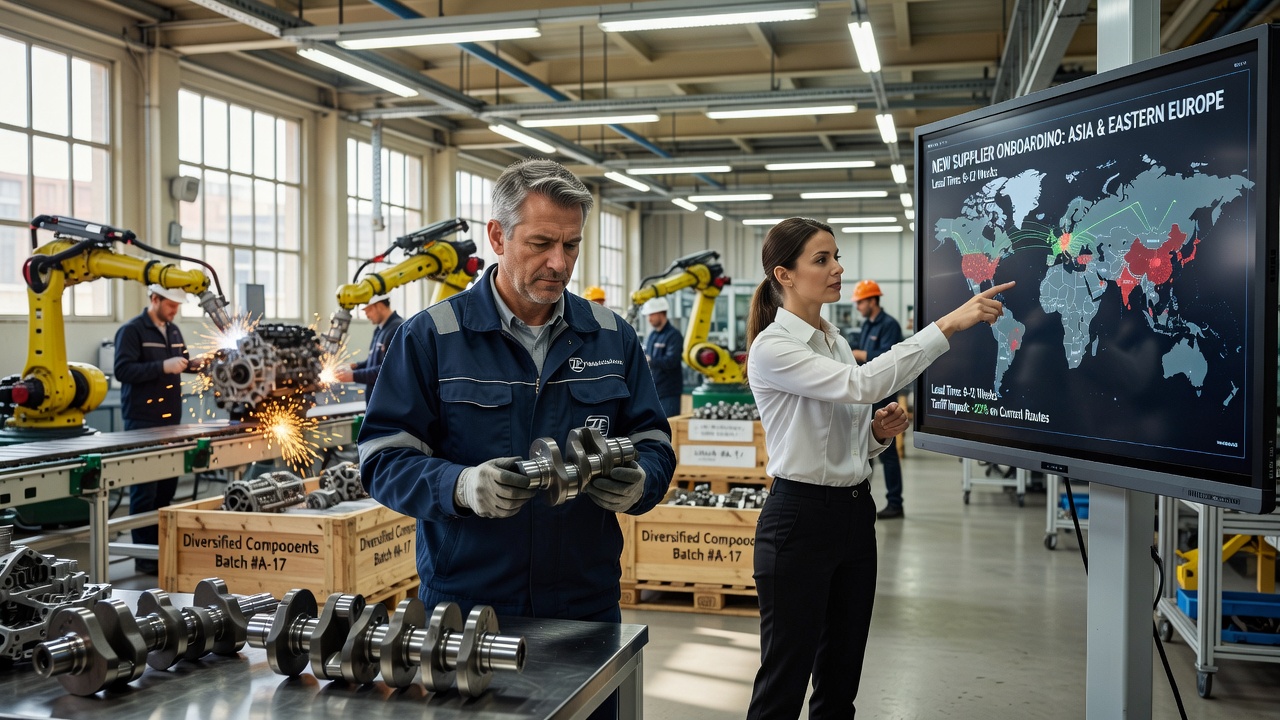
Data from the German Chamber of Industry and Commerce indicates that 37 percent of surveyed manufacturers have already shifted at least one supplier to a new country in the past six months. Eastern European nations, including Poland and the Czech Republic, have emerged as primary beneficiaries of this relocation trend, while Mexico and Vietnam are gaining attention for more distant sourcing diversification. Logistics providers report a surge in demand for rail freight corridors linking Germany with these alternative hubs.
Adaptation Strategies
To mitigate risks, firms are investing in digital supply-chain tools that provide real-time visibility and scenario modeling. Government-backed programs offering subsidies for onshoring critical production steps have also gained traction. Trade experts emphasize that while short-term disruptions are inevitable, the long-term outcome may strengthen European industrial resilience by reducing dependence on single-source suppliers. Continued monitoring of tariff policy developments remains essential, as further adjustments could accelerate these structural changes.