Noah Vogel · 21 September 2026
Baltic Sea Energy Projects Face Renewed Legal Review as Youth Mobilize Over Eastern Cultural Funding Ahead of 2026 Federal Votes
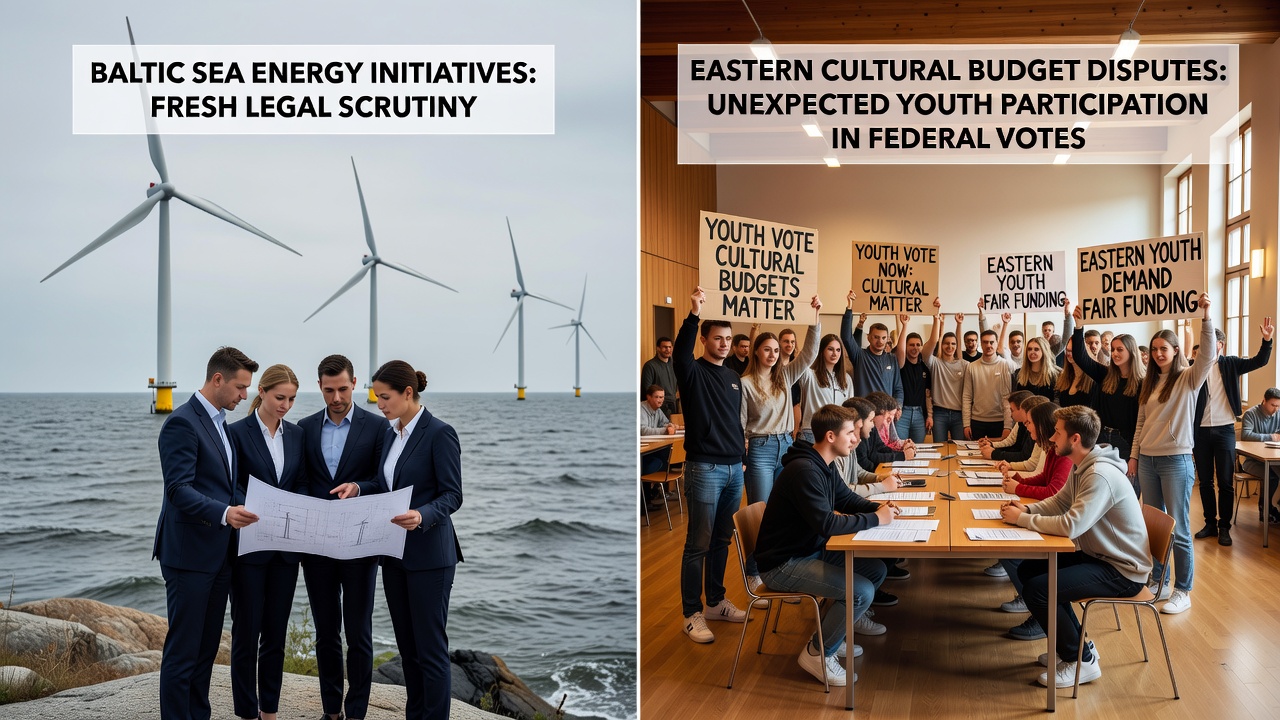
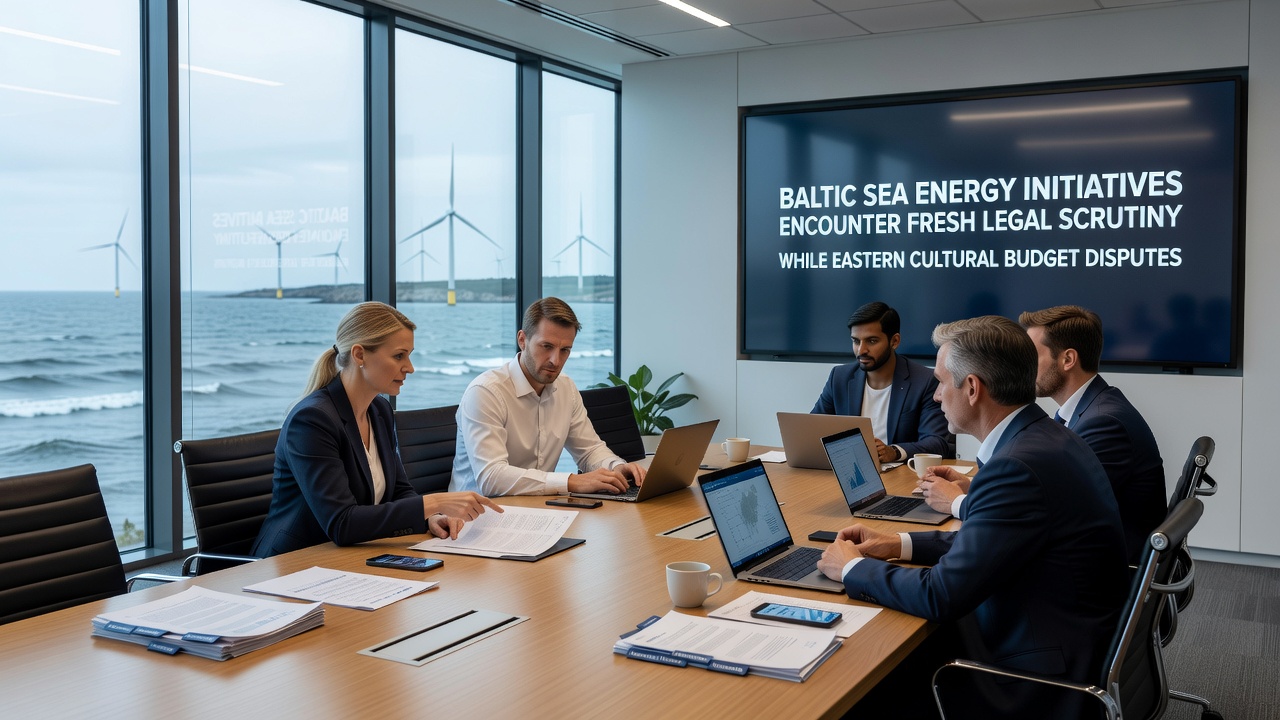
Baltic Sea energy initiatives have drawn fresh legal scrutiny from multiple regulatory bodies, while disputes over cultural budgets in eastern German states continue to attract unexpected levels of youth participation ahead of federal votes scheduled for 2026. Projects involving offshore wind farms, hydrogen pipelines, and grid connections now undergo additional reviews from the European Commission and national courts, according to filings submitted in late 2025. These developments coincide with regional debates in Saxony, Thuringia, and Brandenburg where cultural funding allocations have become focal points for younger voters organizing through digital platforms and local assemblies.
Research from the German Federal Ministry for Economic Affairs and Climate Action shows that Baltic Sea wind capacity reached 8.3 gigawatts by mid-2025, yet permitting delays have increased by 22 percent since the previous year due to environmental impact assessments and maritime boundary disputes. Observers note that legal challenges often center on marine ecosystem protections and compliance with the EU Habitats Directive, prompting several project operators to revise their environmental management plans. Data from the European Environment Agency indicates that similar scrutiny has affected initiatives in Danish and Swedish waters, where court rulings have required updated biodiversity monitoring protocols.
Regulatory Pressures on Offshore Infrastructure
Multiple cases filed in 2025 highlight tensions between rapid renewable expansion targets and existing legal frameworks. One proceeding at the European Court of Justice examines whether current grid connection permits sufficiently account for cumulative impacts on migratory bird populations and seabed habitats. Figures released by the German Wind Energy Association reveal that 14 offshore projects currently await final approvals, with several facing extensions of up to 18 months while additional studies are completed.
Those who've tracked these cases point out that legal actions frequently originate from environmental NGOs and fishing industry representatives who argue that accelerated permitting timelines compromise long-term ecological safeguards. In response, project developers have introduced enhanced mitigation measures, including seasonal construction restrictions and expanded monitoring arrays, as documented in filings submitted to the Federal Maritime and Hydrographic Agency.
Youth Engagement in Eastern Cultural Budget Debates
Parallel developments in eastern states show rising youth involvement in discussions surrounding cultural budget allocations. Regional parliaments in Saxony and Thuringia have reported record numbers of submissions from voters aged 18 to 29 during public consultation periods held throughout 2025. These contributions often focus on funding for theaters, museums, and digital arts programs, with participation rates increasing by 35 percent compared to the 2021 cycle according to state election commission records.
Academic studies conducted at the University of Leipzig indicate that social media campaigns and university-led workshops have played significant roles in mobilizing this demographic. Researchers discovered that coordinated online petitions regarding proposed cuts to regional heritage preservation funds collected over 120,000 signatures within three months. Similar patterns appear in Brandenburg, where youth councils have gained formal advisory status in budget negotiations for the first time.
What's significant is that this participation extends beyond traditional protest activities into structured voting processes and policy drafting sessions. State-level data shows that turnout among first-time voters in local referendums on cultural spending reached 48 percent in several districts during 2025, exceeding previous benchmarks by a substantial margin.
Connections Between Energy Policy and Regional Priorities
Analysts at the Kiel Institute for the World Economy have examined potential overlaps between Baltic energy developments and eastern regional priorities. Their reports highlight how infrastructure investments could influence local employment patterns while also intersecting with cultural preservation concerns in coastal communities. Public hearings scheduled for September 2026 will address both permitting updates for energy projects and allocation frameworks for cultural programs, creating opportunities for coordinated stakeholder input.
Evidence from comparable EU member states, including data published by the Swedish Energy Agency, demonstrates that integrated planning approaches can reduce legal friction when energy and cultural considerations receive simultaneous review. German authorities have begun piloting such models in Mecklenburg-Vorpommern, where joint working groups now evaluate project proposals against both economic and heritage criteria.
Outlook for 2026 Federal Votes
With federal elections approaching in 2026, parties across the spectrum have begun incorporating positions on Baltic energy regulation and eastern cultural funding into their platforms. Voter registration drives targeting younger demographics have expanded in response to observed engagement trends, and several campaign organizations report higher than expected interest in policy briefings on these topics.
Official statistics from the Federal Returning Officer confirm that preparatory measures for the upcoming votes include expanded digital voting information portals and regional outreach events scheduled through spring 2026. These initiatives coincide with ongoing legal proceedings that will likely shape the parameters available to incoming policymakers.
Conclusion
Baltic Sea energy initiatives continue to navigate complex legal requirements while eastern cultural budget discussions draw increased participation from younger demographics ahead of the 2026 federal votes. Available data from regulatory agencies and academic institutions documents these parallel developments without indicating direct causation between the two domains. Ongoing proceedings and public consultations scheduled through the coming year will provide further clarity on how these processes unfold and interact within Germany's federal structure.